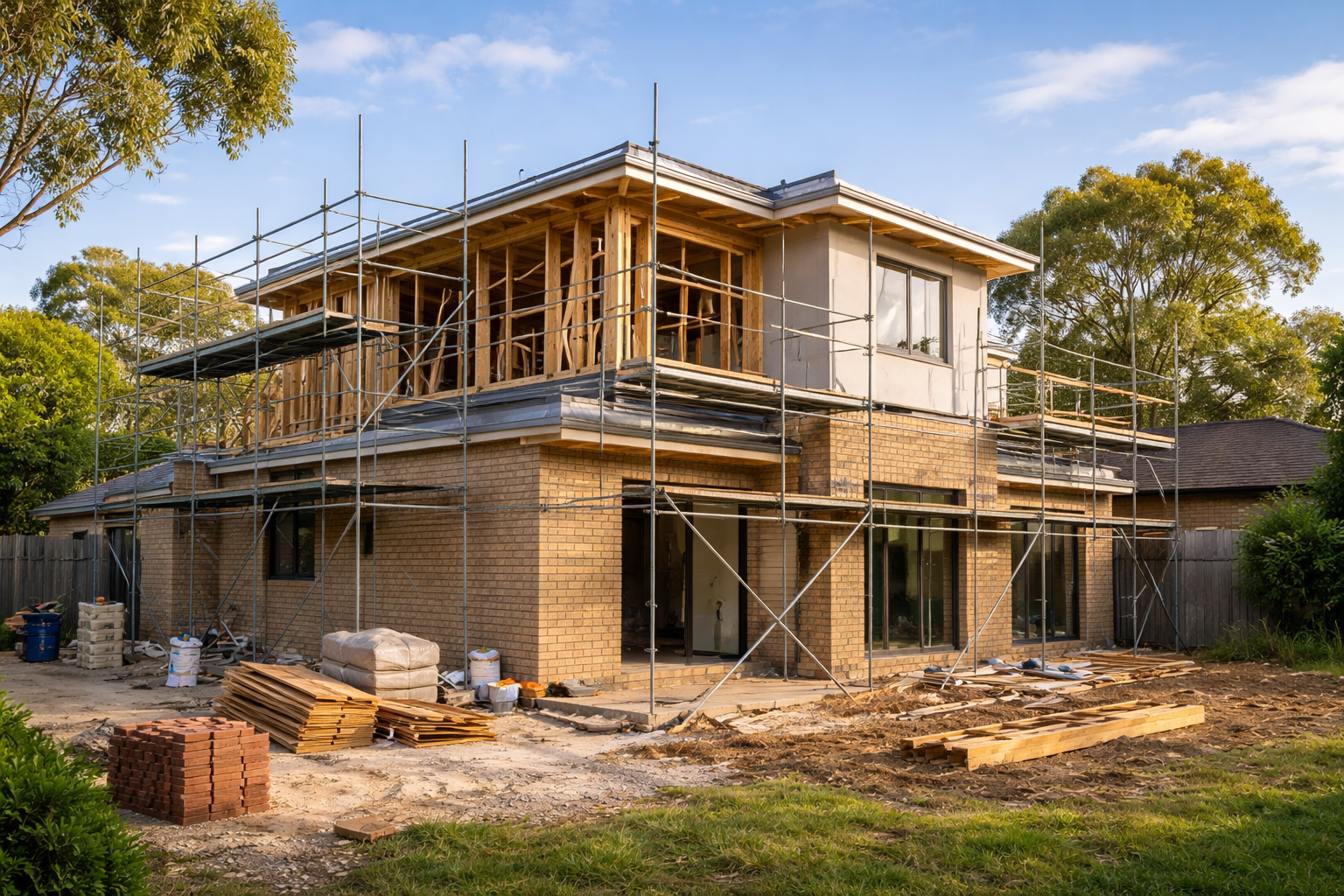
In major reforms to Victorian building laws, from 1 July 2026, the Building and Plumbing Commission (“BPC”) is granted power to issue rectification orders against a person who has carried out building work. This is one of the most significant changes to domestic building dispute resolution in Victoria in years, and it has real consequences for builders and contractors and for Victorian home owners and investors alike.
Who can rectification orders be made against?
A person could be:
- an individual builder
- a building company
- a sole trader or corporate sub-contractor
An order can potentially be made whether or not the person is registered and whether or not there is a contract with them, although who is responsible depends on the work and the circumstances.
What type of works are covered by Rectification Orders?
- Incomplete:– building work not complete according to the contract, excluding omissions or defects that do not prevent the building work from being used for its intended purpose
- non-compliant: -building work that does not comply with the Building Act or regulations, the building permit or a “binding determination” that applies to the carrying out of the work.
- Defective:– in breach of a warranty in section 8 of the Domestic Building Contracts Act (Vic) 1995 or a failure to meet a standard or quality of work specified in the contract (commonly known as building defects).
When can a Rectification Order be made?
The BPC describes an order period of up to 10 years from the certificate of final inspection or the occupancy permit. Where the work did not need a building permit, the starting point is the date of practical completion. Don’t assume every time limit runs from the contract date, and don’t assume older work is excluded simply because it was carried out before 1 July 2026. Get advice on how the time limits apply to your project.
How the process works
Usually, the first step is to raise the problem with the builder in writing and give them a chance to respond. Keep photographs, inspection reports, the contract and all correspondence, because the BPC will want to see the evidence.
A rectification order is not automatic in every dispute, and who is responsible can depend on the work and the circumstances. The BPC must consider whether to issue a rectification order before it determines a Home Warranty claim, and an order may also be available where insurance does not apply, particularly for serious defects in major building elements.
If an order is proposed or issued, get advice on how to respond, the work required and the dates specified. The order process does not pause any separate contractual, insurance or court deadline. We regularly act for clients in domestic building disputes, including conciliation and VCAT proceedings.
Date for compliance with Rectification Order
If made, the Rectification Order will include a date for compliance by the builder.
The builder can apply to extend the date, which the BPC can accept or reject.
The builder will also have a right to apply to VCAT to review the Rectification Order. However, VCAT has no power to order a stay of the Rectification Order pending a decision being made by VCAT.
In other words, builders must comply with the time limit in the Rectification Order (as extended by the BPC, if applicable) even if the builder is still waiting for VCAT to determine the builder’s application to review the Rectification Order. This is a concerning (but deliberate) outcome in these new legislative changes.
For more information and advice on these matters, please call our office on (03) 9629 2211 to speak to an experienced building and construction lawyer in Melbourne today.
Frequently asked questions about rectification orders in Victoria
What is a rectification order?
A rectification order is a direction from Victoria’s Building and Plumbing Commission (BPC) requiring a person to fix building work that is incomplete, non-compliant or defective.
Who can the BPC issue a rectification order against?
Any person who carried out the domestic building work. This could be an individual builder, a building company, or a sole trader or corporate sub-contractor, potentially whether or not they are registered or have a contract, depending on the work and the circumstances.
How long after building work can a rectification order be made?
A rectification order can be made for up to 10 years after the building work was completed. The 10-year period runs from the date of the occupancy permit (for new homes), the certificate of final inspection (for renovations), or, if neither of these exists, the date of practical completion.
Can a builder challenge a rectification order?
A builder can apply to the BPC to extend the compliance date or can apply to VCAT to review the order. However, VCAT cannot stay the order, so the builder must still comply within the time limit while the review is decided.
This article is general information only and not legal advice. For advice about your situation, contact Hendersons Legal on (03) 9629 2211 or via our enquiry form.