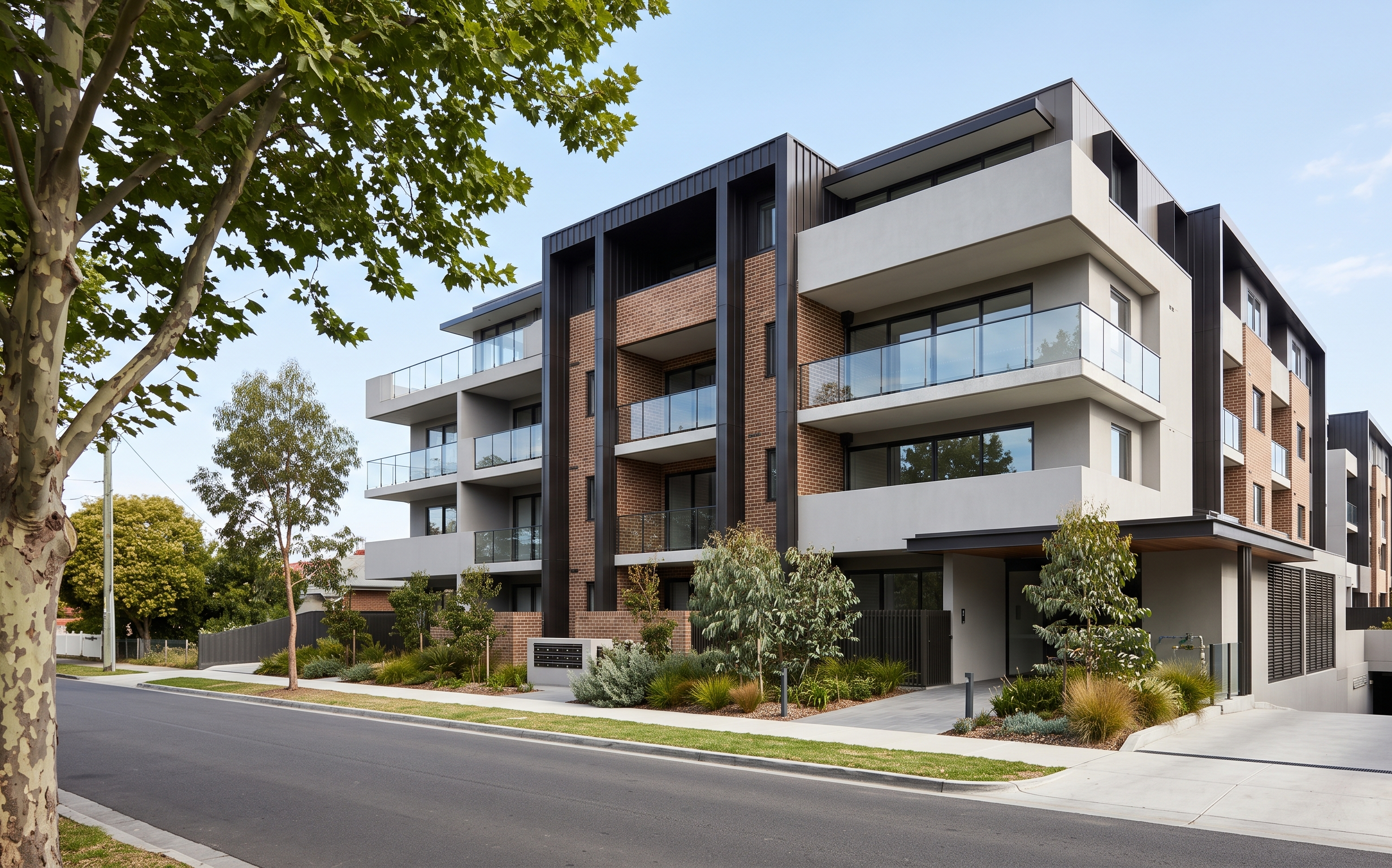
Victoria is changing the rules for apartment developers. Under the new developer bond scheme, developers of residential apartment buildings of more than three storeys (in practice, four storeys and above) will have to lodge a bond worth 2% of the total build cost with the regulator before they can even apply for an occupancy permit. The scheme is created by the Building Legislation Amendment (Buyer Protections) Act 2025 (Vic), and its purpose is straightforward: make sure building defects get fixed after handover, without owners waiting years or chasing an insurer who may no longer be there.
If you develop, build, finance, or buy apartments, the developer bond scheme affects you. Here is how it works, what it will cost, and what to do before it applies.
What is the developer bond scheme?
A developer must lodge a financial bond with the Building and Plumbing Commission (“BPC”), the regulator that has replaced the Victorian Building Authority, before applying for an occupancy permit for a qualifying apartment building. The bond is a form of security. If defective work is found after the building is finished and the developer does not fix it, the owners corporation can claim on the bond to pay for the repairs.
In other words, it is not an insurance policy. It is a sum of secured money the regulator holds for a limited period so that the cost of fixing defects sits with the developer, not the owners. The Government has described the scheme as a first step towards a future 10-year insurance product for apartments.
Which buildings are covered?
The scheme applies to residential apartment buildings of more than three storeys. Standard houses and low-rise projects are not caught. Acceptable forms of security include bank guarantees and surety bonds, or any other instrument prescribed by the regulations.
How much is the bond, and what is “total build cost”?
The bond is set at 2% of the total build cost. The Victorian Government guidance states it plainly:
“The Building Legislation Amendment (Buyer Protections) Act 2025 establishes this scheme and sets the bond rate at two per cent of the cost of constructing the building.”
The detail that matters is the definition. “Total build cost” is the estimated total cost of the building work carried out for or in connection with the construction of the apartment building. That is not limited to the base structure. It includes finishes, services, and external works, so on a large project the bond can be a significant amount that must be secured for the whole bond period.
The building assessor and the two inspections
The developer must appoint an independent building assessor, at the developer’s own cost, to inspect the finished building and prepare two reports: a preliminary report and a final report.
The preliminary inspection must be carried out no later than 18 months after the occupancy date. It identifies defective building work and its cause. The developer is then given a chance to rectify. The same assessor carries out the final inspection to confirm whether the defects have been fixed. If the developer fails to engage the assessor for the final inspection, the BPC can appoint one itself.
When can an owners corporation claim on the bond?
This is the part every owners corporation should understand. If defects recorded in the preliminary report are not rectified and still appear in the final report, the owners corporation may make a claim on the bond to cover the cost of fixing them. The bond is held for two years after the occupancy permit is issued. Any part of the bond that is not used is returned to the developer once the bond period ends and liability is cleared.
Off-the-plan buyers: a new right to rescind
The Act also amends the Sale of Land Act 1962 (Vic). If an occupancy permit is issued but the developer has not lodged the bond, off-the-plan purchasers are given a statutory right to rescind their contract and recover everything they have paid, including the deposit, together with penalty interest. This is a serious commercial risk for developers, because a single missed bond can unravel settlements across an entire building. Non-compliance also carries heavy penalties, up to 500 penalty units for an individual and 2,500 penalty units for a company, which is more than $500,000.
When does the scheme start?
The scheme commences on 1 July 2026, and the supporting regulations are due to be made by that date. A transition period then applies. On the current guidance, the bond obligation will apply to projects with a building permit issued from 1 July 2027. If you have a project in the pipeline, check where your building permit date falls, because it decides whether the bond applies to you. The regulations are still being finalised, so some of the finer detail may still change.
What developers and owners corporations should do now
For developers, the work starts at the finance and programming stage. Build 2% of the total build cost into your capital structure, allow for the assessor’s inspections in your delivery timeline, and review your builder and consultant contracts so the defect risk flows down to the parties responsible for it. For owners corporations and buyers, the priority is knowing your rights to the inspection reports and to claim on the bond if defects are left unfixed.
We act for developers, builders and contractors, and owners corporations on building and construction and defect matters. With a senior solicitor who is a former registered builder and as MBAV panel lawyers, our firm understands both the law and the practical side of getting a building fixed. For advice on how the developer bond scheme affects your project, please call our office to speak to an experienced building lawyer.
Frequently asked questions
Does the developer bond scheme apply to houses?
No. It applies to residential apartment buildings of more than three storeys (four storeys and above). Standard homes and low-rise developments are not covered.
How much is the developer bond?
2% of the total build cost, which includes finishes, services, and external works, not just the base structure. It must be lodged with the BPC before the developer applies for an occupancy permit.
How long is the bond held?
Two years after the occupancy permit is issued. A building assessor inspects the building during that period, and any unused portion of the bond is returned to the developer once liability is cleared.
What happens if a developer does not lodge the bond?
The developer cannot apply for an occupancy permit, faces penalties of more than $500,000, and off-the-plan buyers may rescind their contracts and recover their deposit with penalty interest.
This article is general information only and not legal advice. For advice about your situation, contact Hendersons Legal on (03) 9629 2211 or via our enquiry form.